Your training camp
Makuleke Camp
Welcome to the heart of the wilderness. This training camp lies in the Pafuri region of Kruger National Park, within the Makuleke concession. Returned to the Makuleke community after decades, this historic area offers a remarkable diversity of habitats and wildlife.
Discover a landscape of gently flowing rivers and ancient baobabs, with hippos and rare bird species. The camp is not open to ordinary tourist visits and offers an immersive nature experience in one of the park’s wildest and most remote regions. Explore the history and natural beauty of the Makuleke concession.
At a glance
Country
South Africa
Region
Kruger National Park
Training provider
EcoTraining

Location and nature
The concession
The 24,000-hectare (59,305-acre) Pafuri region lies between the Limpopo and Luvuvhu rivers in northern Kruger National Park. It includes the Makuleke concession, home to the Makuleke community and one of the park’s most scenic and diverse areas.
The concession is not accessible to ordinary park visitors. It belongs to the Makuleke community and has considerable historical significance for South Africa. The community was forcibly removed in 1968; following a lengthy process, the land was returned in 1998. This remote wilderness combines varied vegetation, excellent wildlife viewing and birdwatching with stories of early explorers and ancient civilisations.
Surroundings
The training camp lies between the Limpopo and Luvuvhu rivers in a wilderness steeped in history, in one of the most biologically diverse parts of Kruger National Park.
The landscape ranges from the gently flowing Luvuvhu River, lined with nyala trees and fever-tree forests and home to hippos and crocodiles, to Lanner Gorge, palm-fringed wetlands and rocky hills with thousand-year-old baobabs. Members of the Makuleke community work at the camp, and the region’s rich history is rewarding to explore.
Wildlife in the Makuleke concession
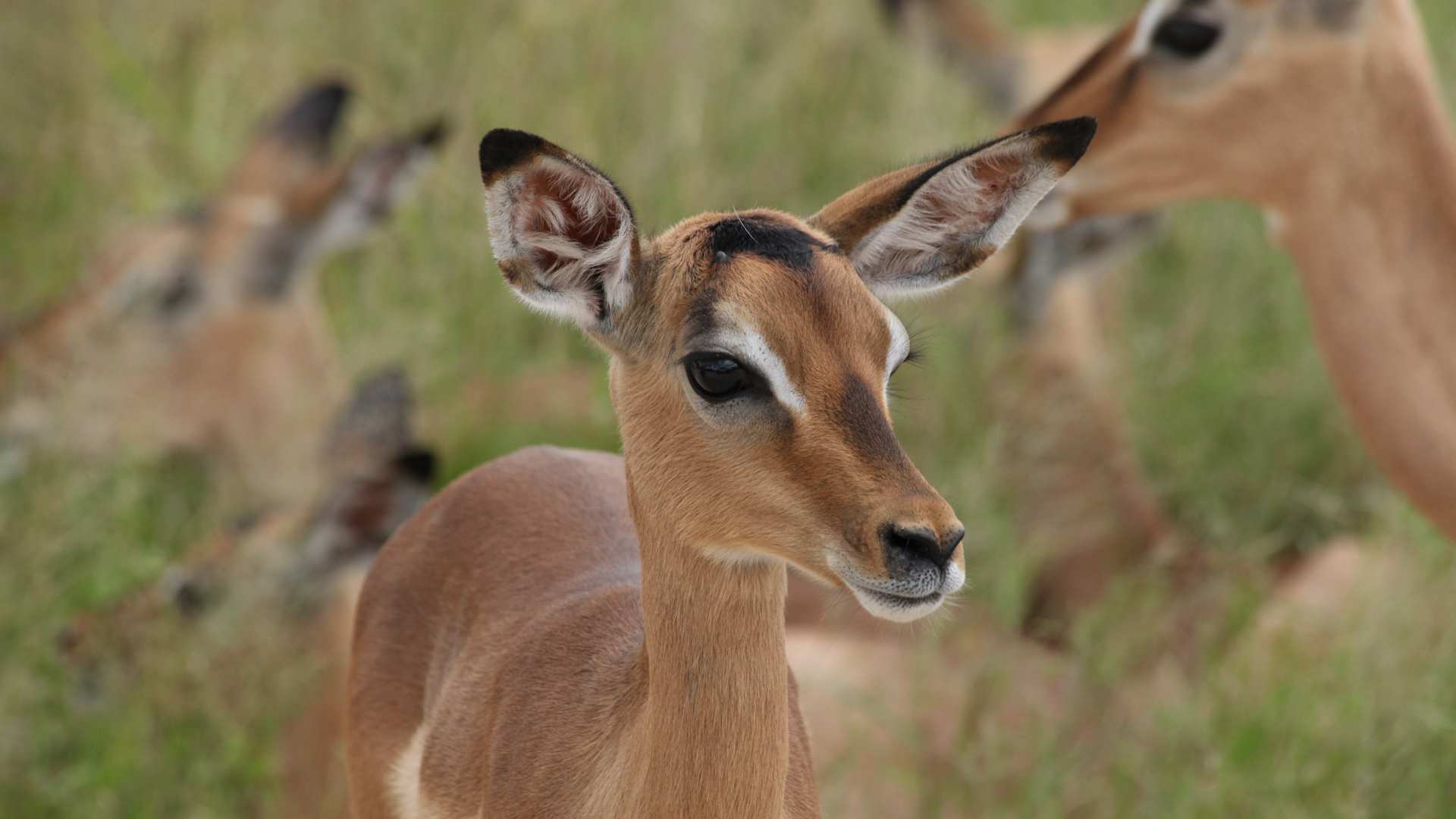
Wildlife includes zebra, kudu, impala and abundant nyala. Lions and leopards are particular highlights, alongside elephant herds, African buffalo and a growing wildebeest herd. Eland, bushpig and aardvark are seen less frequently.
This part of Kruger is also renowned for birdwatching, with rare species including Pel’s fishing owl, three-banded courser and grey-headed parrot.
Temperatures at camp
Kruger National Park has a subtropical climate, with hot summers (an average of 40°C) and warm, dry winters (average minimum 9.3°C and maximum 26.3°C). Summer showers can occur between October and March. Early mornings and late afternoons or evenings can be very cold in winter, so bring enough warm clothing.


Life in camp
Accommodation
The unfenced camp has ten comfortable thatched tented units on wooden decks shaded by large nyala trees. Each unit has twin beds, an en-suite bathroom with a shower, basin with hot water and flushing toilet, plus a private veranda. Bedding is provided; you are welcome to bring an extra pillow or blanket.
The central communal area is an open, thatched deck used for meals, lectures and study. An evening campfire clearing provides a relaxed setting for spending time together.
Electricity
The camp has no mains electricity. Solar lamps provide lighting, and a generator is used to charge batteries. Studying by solar light can be challenging, so a head torch and an additional battery-powered or rechargeable lamp are recommended.
The generator is intended for camp operations and is not switched on specifically to charge participants’ cameras or other equipment. You may use it while it is running, at your own risk.
Wi-Fi and mobile reception
Mobile reception is limited, and there are no shops selling airtime. Mobile phone use is discouraged in camp to preserve the peace of the wilderness for other participants.
Charging facilities are available; please bring your own adapters. Camp phones and Wi-Fi are reserved for emergencies.
The nearest mobile reception is 16 kilometres away, and a weekly trip is arranged so participants can make calls. Bring enough airtime, as it cannot be purchased in camp.
Drinks
In addition to the soft drinks, tea and coffee included in the course price, other drinks can be purchased.
Water
The existing camp information describes the tap water as suitable for drinking.
Laundry
A hand-wash laundry service is available for a small weekly fee.
Parking at Makuleke Camp
Designated parking areas are available at Pafuri Gate. Parking at the camp itself is not permitted.


Getting there and planning
GPS coordinates for Makuleke Camp
22°21′26.2″S 31°10′18.2″E (-22.357283, 31.171722)
Getting to camp
The instructors meet participants at Pafuri Gate, Kruger National Park, at 14:00 on the arrival day.
Travelling by road from Johannesburg (approximately 6–7 hours to Makuleke)
- Bush Bus Service: the preferred option for each course. Additional charges apply; please contact our office for details.
- Self-drive: we can also put you in touch with another participant if you would prefer not to travel alone.
- Rental car: you can drive to Makuleke in a rental vehicle and leave it at Pafuri Gate for the duration of your course.
Fuel stations
There are no refuelling facilities at camp. The nearest options listed in the camp information are:
- Punda Maria Rest Camp (entry and exit via Punda Maria): 75 km from camp.
- Caltex filling station, Tshipise (entry and exit via the N1): 120 km from camp.
- Messisi – General Trader: 20 km from Pafuri Gate and 40 km from camp.
Directions from Gauteng to Pafuri Gate, Kruger National Park
The total distance is approximately 560 km. Follow the N1 north towards Pretoria/Pietersburg/Polokwane, passing the Phumulani, Carousel, Kranskop and Nyl toll plazas.
- Just before Polokwane, take the N1 Louis Trichardt/Musina exit and follow the signs for N1 Louis Trichardt/Musina.
- After approximately 70 km, continue straight through the local settlement and cross the Tropic of Capricorn towards Capricorn Plaza.
- Reset your trip meter at Capricorn Toll Plaza.
- After 39 km, pass two stop signs and a roundabout and continue towards Musina on the N1.
- Cross the Soutpansberg mountains and continue through the Hendrik Verwoerd tunnels towards Musina.
- After 96 km, pass Baobab Toll Plaza.
- At 96.8 km, turn right onto the R525 towards Tshipise and Pafuri Gate, then reset your trip meter.
- After 110 km, pass the chevron barrier (at 109.6 km, follow diversion signs to the left).
- Continue straight along the R525 for a further 19 km to Pafuri Gate, Kruger National Park.
Entrance fees
Kruger National Park entrance fees are payable when entering through Pafuri Gate.


Ranger training at this camp
We help you find the right combination of course, camp and travel dates.