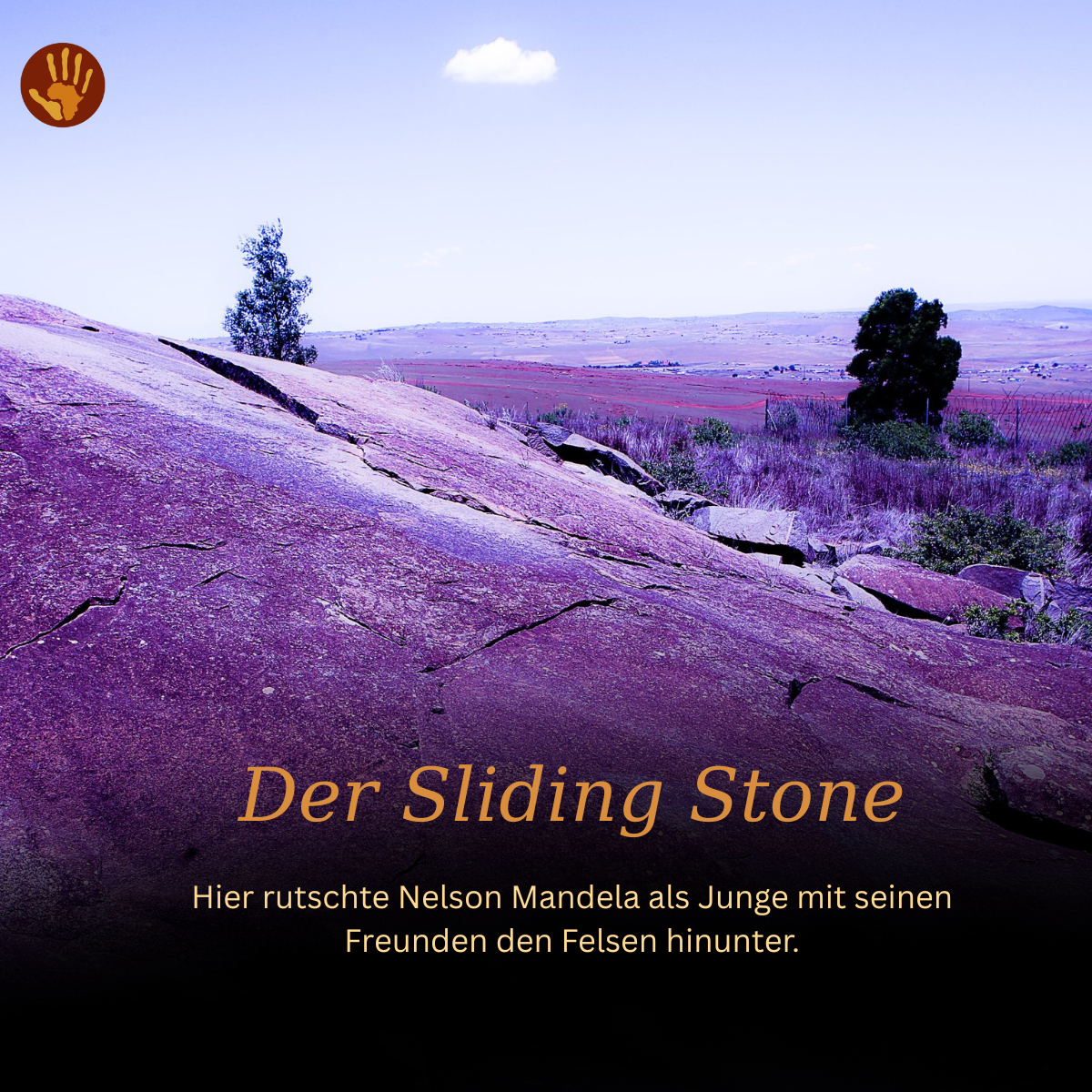
Before Nelson Mandela became one of the world's most famous statesmen, he was a boy who herded cattle, roamed the hills with his friends, and used a smooth rock as a natural slide.
Traveling through the wider Wild Coast region, you encounter more than just green hills, small villages, and quiet roads. You are moving through the very landscape that shaped Rolihlahla Mandela long before the world knew his name.
The places of his childhood lie slightly inland from the coast, but they can be wonderfully integrated into a trip through the Eastern Cape. Mvezo, Qunu, and Mqhekezweni are not major tourist attractions to be quickly visited and checked off a list. They are places that, together, tell the story of how a country boy became an extraordinary leader.
Mvezo: Where the story began
The journey in Mandela's footsteps begins in Mvezo, a small village on the Mbashe River. This is where Rolihlahla Mandela was born into the Madiba clan on July 18, 1918.
His given name, Rolihlahla, is often translated as "troublemaker." At the time, however, no one could have guessed how fitting that name would one day seem—not because Mandela sought trouble for its own sake, but because he was willing to challenge an unjust system.
Mvezo provides a first impression of the rural world he came from: a vast landscape, traditional homesteads, and the river winding through the hills. However, the memories that Mandela himself later associated most closely with his childhood were primarily formed in Qunu.
Qunu: The boy behind the famous name
As a young child, Mandela moved with his mother to Qunu. He spent some of the happiest years of his childhood here. He herded cattle, played with other children, and grew up in a community where much of what a family needed came from the fields and the livestock.
His cousin Sitsheketshe, who grew up with him, later recalled how the boys would fetch the cattle, how Mandela would milk them, and how corn was ground on a stone. They ate with amasi, the traditional fermented milk. It is a simple image that suddenly reveals the future president as a village boy once again.
In Qunu, Rolihlahla also attended school for the first time. On his first day, his teacher, Miss Mdingane, gave him the English name Nelson. At the time, it was common practice in mission schools to give African children English or Christian names. According to Mandela himself, he never knew why she chose "Nelson" specifically.
Today, it is not just the Nelson Mandela Youth and Heritage Centre in Qunu that commemorates his early years. Some of the most personal sites are far more unassuming—and perhaps that is precisely why they are so moving.
The Sliding Stone: Before he changed the world
Nestled among the hills of Qunu is a smooth rock known as the "Sliding Stone." This is where Nelson Mandela and his friends would slide down as boys.
It is not an imposing monument, nor a place designed to impress with its scale. At first glance, it looks like just another rock in the landscape. But once you know who once played here, your perspective changes.
Long before Mandela became a lawyer, a prisoner, a president, and a global symbol of reconciliation, he was just a child among other children here. He knew the hills, the streams, and the paths around Qunu not from history books, but as his home.
Perhaps that is the true significance of this place. The Sliding Stone serves as a reminder that even the greatest life stories begin small—with a family, a community, a landscape, and the experiences of childhood.
Mqhekezweni: Where Mandela learned to listen
When Mandela was twelve years old, his father passed away. The young Rolihlahla was then placed in the care of the acting Thembu regent, Jongintaba Dalindyebo, and moved to the Great Place in Mqhekezweni.
There, he observed the community elders gathering to discuss important matters. Everyone was allowed to voice their opinion. The regent would listen first and only speak after the others had shared their thoughts.
These gatherings left a lasting impression. Mandela learned that leadership does not mean speaking first or simply imposing a decision on others. Good leadership begins with listening and seeks to guide people toward a shared solution.
The elders' stories about their ancestors and the resistance against colonial rule also stirred something within him. According to the Nelson Mandela Foundation, it was then that he began to dream of one day contributing to his people's struggle for freedom himself.
Standing in Mqhekezweni today, it is easier to understand the connection between the rural community of his youth and Mandela's later leadership style.
A landscape he longed to return to
Mandela left the Eastern Cape, studied, became a lawyer, a resistance fighter, and eventually a political prisoner. After 27 years of imprisonment, his path led him to the country's highest office. Yet, the landscape of Qunu remained forever linked to his sense of home.
As his term as president drew to a close, he spoke of waking up with the sun again and walking in peace through the hills and valleys of Qunu. Despite everything he had experienced and achieved, he described himself as a "country boy."
Perhaps you only truly understand these words when you drive through this region yourself. The rolling hills, the scattered houses, the animals by the roadside, and the people going about their daily lives here are not just the backdrop to his story. They are part of it.
More than just a stopover
A journey in Mandela’s footsteps is not a visit to a single monument. It leads from his birthplace in Mvezo, through the childhood landscape of Qunu, to the Great Place in Mqhekezweni, where his initial ideas about listening, community, and leadership were formed.
These locations add a layer of depth to any trip through the Wild Coast region. While the coast may first capture your attention with its wild beauty, a story that reaches far beyond the Eastern Cape awaits just a little further inland.
And sometimes it is the smallest place that tells the most: a smooth rock where a boy played with his friends, long before he would go on to change the world.
If you would like to include Mandela’s homeland in your journey through the Eastern Cape, the Ajimba team, led by Frank and Holger, will be happy to help you integrate the right stops into your route.
Ask us about a journey in the footsteps of Nelson Mandela