Southern Right Whales in the Western Cape: Why are they returning
06
.
10
.
2026
-
Südafrika
I am currently in South Africa, and on this trip, I was lucky enough to experience Southern Right Whales from two different perspectives: from the shore during a coastal hike and from a boat out on the ocean.
Two encounters with the same impressive animals—and yet, each one feels different.
When hiking, you can stop, look out at the water, and take your time. On a boat, you get a different sense of the scale of these animals. And a sense of how much of their lives takes place beneath a surface that only occasionally grants us a brief glimpse.
These encounters made me curious. Why do the whales return here every year? Why do they stay so close to the shore? And what is it all about when a giant tail fluke rises out of the water?
The more I learned about it, the more exciting my observations became.
Why do Southern Right Whales come to the Western Cape every year?
Southern Right Whales come to the South African coast to breed, give birth, and nurse their calves. The protected, near-shore waters of the Southern Cape are vital calving and nursery grounds.Southern Right Whales", come to the South African coast to breed, give birth, and nurse their calves. The protected, near-shore waters of the Southern Cape are vital calving and nursery grounds.
But this time on the coast is only one chapter of their lives.
During the Southern Hemisphere summer, Southern Right Whales feed primarily in the Southern Ocean. Their massive bodies are fueled by surprisingly small creatures: copepods and krill. Instead of teeth, they have baleen plates, which they use to filter their food from the seawater. In winter, many of them migrate north to their breeding grounds, including those off the coast of South Africa.
Looking at it from the shore, it’s a special thought: the whale in front of me connects this coastline to distant ocean regions that I will likely never see.
(c) Marine Dynamics, Kleinbaai
A newborn whale – longer than a car
One figure really stood out to me: a southern right whale calf is already about five to six meters long at birth.
The gestation period is approximately one year. Nursing also lasts about a year before the calf is weaned. The supposedly small animal next to its mother is therefore quite large even at birth – and still has a lot of growing to do.
Something else I didn't know before: an annual whale season doesn't mean that every mother returns with a new calf every year.
In South Africa, a three-year interval between births was typical for a long time. Researchers have since observed a shift to four to five years. They link this development to changes in feeding grounds and the females' energy reserves. So, what happens far out in the Southern Ocean also influences the encounters here on the coast.
With this knowledge, you look at a mother and her calf differently. There is a long story behind those two backs at the water's surface.
Why do whales jump out of the water – and can they really "sail"?
I had expected to learn something about whale migration. That they can also sail came as a surprise.
Southern right whales sometimes lift their massive tail flukes out of the water and hold them in the air. The wind can then push the animal across the water's surface. This behavior is actually referred to as "sailing".
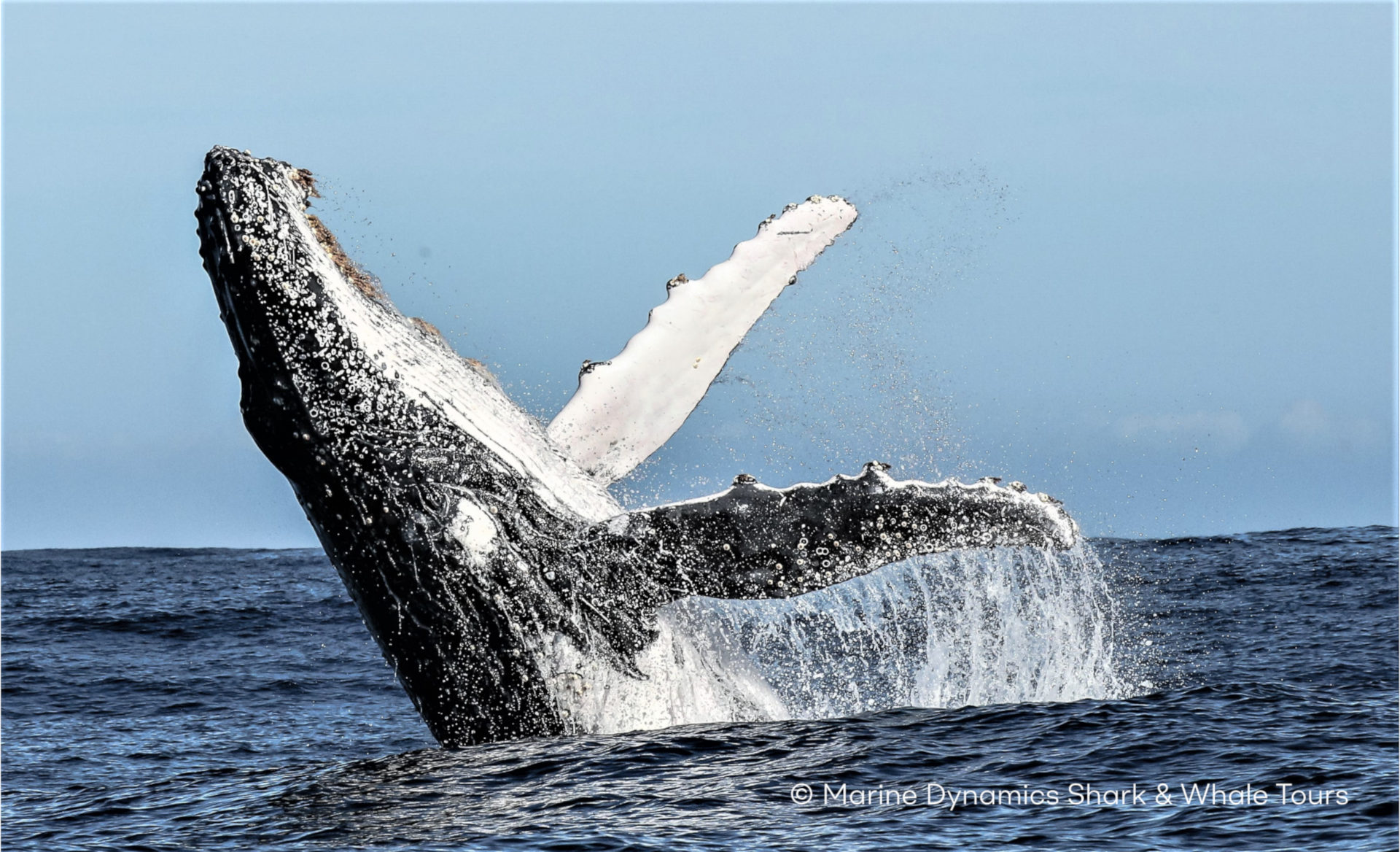
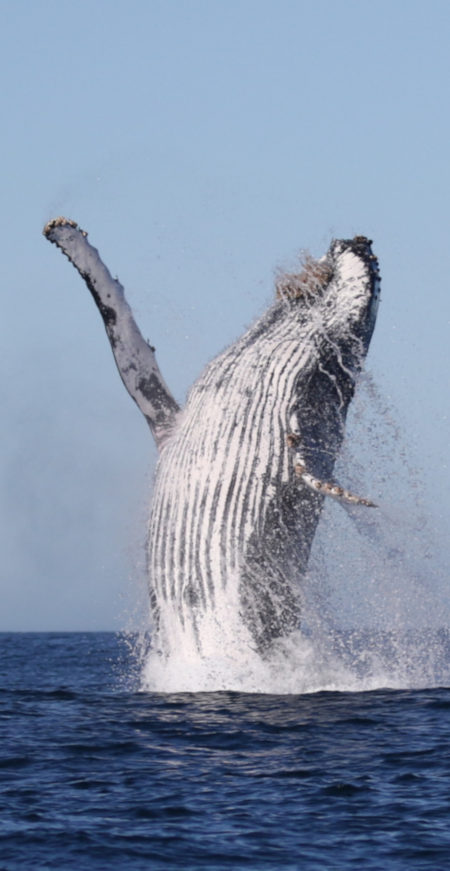
Even more spectacular is what is known as breaching: a whale catapults a large part of its body out of the water and lands back in the sea with a massive splash.
Why do they do it? There is no single, definitive answer. Possible explanations include communication, play, or dislodging external parasites. Depending on the situation, a jump could serve different functions.
I like that some questions remain unanswered. We can observe these animals, study them, and identify behavioral patterns – yet we still don't understand everything by a long shot.
A personal fingerprint and perhaps a century of life
The rough, light-colored patches of skin on a southern right whale's head are called Callosities. Tiny inhabitants, particularly whale lice, give them their whitish appearance.
The pattern of these patches is unique to every animal. Researchers can use them to identify individual whales over many years. A photo can therefore be much more than just a nice souvenir: it can help trace an animal's life story.
And that story can be surprisingly long. While their exact life expectancy is difficult to determine, some studies suggest that southern right whales can live to be over 100 years old.
A thought that stays with me: the animal out there might have been swimming through these waters long before I was born.
When and where can you see southern right whales in South Africa?
The typical season for southern right whale sightings around Hermanus and Gansbaai runs from June to November. Sometimes the animals can still be seen in December. Their arrival and departure can vary; sightings cannot be guaranteed.
Hermanus, De Kelders, and Gansbaai offer opportunities for whale watching from the shore, so you don't necessarily have to get on a boat. Sometimes a coastal path, a little patience, and a watchful eye on the ocean are all you need.
Having been able to experience both perspectives on this trip, I am glad I took the time for both.
There is something special about spotting a whale while out for a hike. You stop. You look again. And suddenly, the rest of the afternoon doesn't feel quite so urgent.
That is exactly the kind of space I want to leave in the trips we plan at Ajimba: for a walk, a break, and the possibility that something extraordinary might appear right off the coast.
The whales come to the Cape for an important chapter of their lives. Giving them a little of our time seems like a beautiful way to honor that.